
Let’s Talk Prompt Payment
Why Late Payment Matters for SMEs
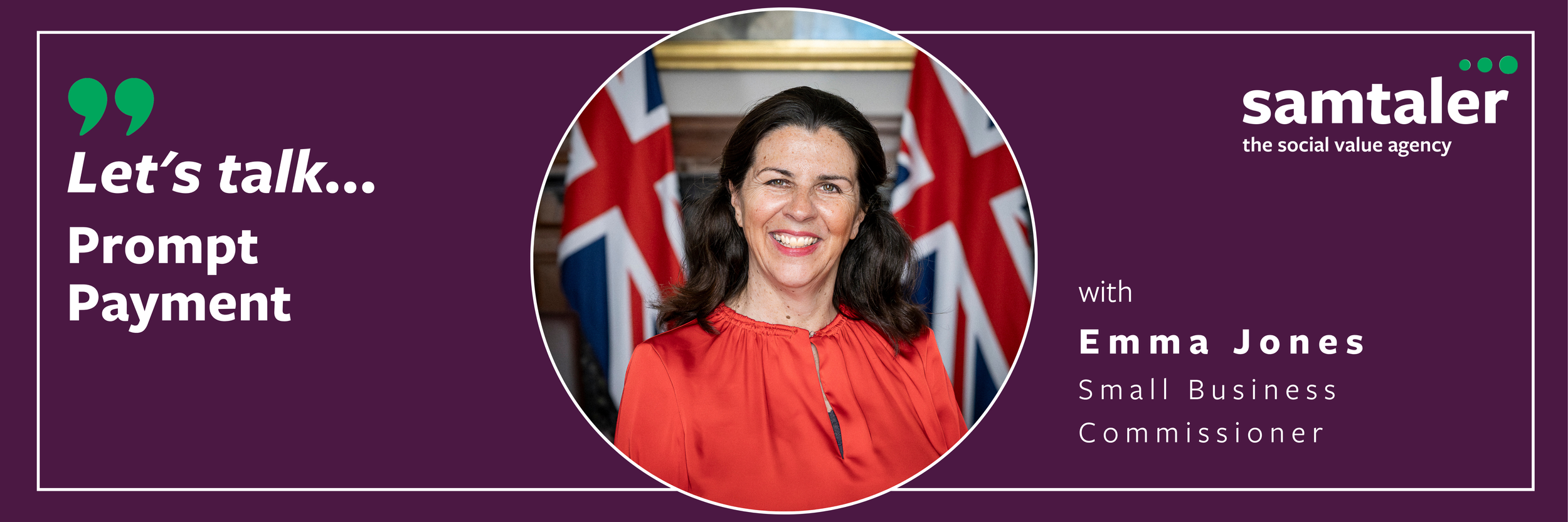
Emma Jones, the UK’s Small Business Commissioner, joins Let’s Talk Social Value to explore one of the most persistent challenges facing small businesses: late payment.
Focused specifically on improving payment practices, Emma’s role centres on getting money moving faster through the economy - helping SMEs spend less time chasing invoices and more time growing their business.
In this episode, Emma shares the scale of the issue and what’s driving change, including proposed legislation to cap payment terms at 60 days and introduce automatic interest on overdue invoices. The discussion reframes late payment as more than an administrative issue, positioning it as a critical factor in fair supply chains and effective social value delivery.
For organisations working across procurement, infrastructure, and public sector supply chains, the message is clear: how and when you pay your suppliers directly impacts trust, performance, and long-term value creation.
Listen in to explore key insights, including:
Why late payment continues to cost the UK economy billions and place pressure on SMEs
What proposed legislation could mean for payment terms, supplier relationships and compliance
How a 60-day cap and automatic interest on overdue invoices would change current practices
Why most late payment is driven by systems and processes rather than intent
The role of prompt payment in building stronger, more resilient supply chains
How organisations can improve onboarding, invoicing and internal processes to reduce delays
Why prompt payment should be considered a core part of delivering social value
“We’ve got to get money flowing and cash flow strong for small businesses in order for them to grow.”
Moving Beyond Intent: From Process to Practice
A central theme of the episode is that late payment is rarely about deliberate behaviour. Instead, it is often the result of complex internal systems, unclear processes, and breakdowns in communication between teams.
Emma highlights the need for organisations to move beyond good intentions and focus on practical improvements - from clearer supplier onboarding to better use of technology and more transparent payment processes.
This shift is not just about compliance. It’s about reducing friction across the supply chain, improving supplier relationships, and enabling SMEs to operate with greater confidence and stability.
The Social Value Case for Prompt Payment
Beyond financial impact, prompt payment plays a direct role in delivering social value.
When SMEs are paid on time, they are better positioned to invest in their workforce, support local communities, and contribute meaningfully to wider economic growth. Conversely, poor payment practices can undermine even the strongest social value commitments made during procurement.
This episode challenges organisations to look beyond policy and pledges and focus on the day-to-day behaviours that shape their supply chains.
“If you’re serious about social value, you have to be serious about paying your suppliers on time.”
What’s Next?
With potential legislation on the horizon, the direction of travel is clear: prompt payment is moving up the agenda.
For organisations already working within public sector supply chains, this is an opportunity to review current practices, strengthen internal processes, and ensure they are aligned with both compliance expectations and social value objectives.
This episode offers a timely and practical perspective for anyone looking to build stronger supply chains and deliver social value in a way that stands up in practice - not just in principle.
Need Social Value Support?
Samtaler works with organisations to strengthen social value delivery, strategy, and bid performance. Whether you’re just starting out or want to boost your scores, we’re here to help. 📧 hello@samtaler.co.uk
Recent Content:


Sign up to The Social Value Files for inspiration and practical ideas to create social value for your business.
In this Bitesize episode of Let’s Talk Social Value – Stories and Insights, our Partnerships Consultant Michaela Pearson is joined by Emma Harris, Head of Partnerships and Programmes at Boards for Education (formerly Governors for Schools), to explore the impact of governance volunteering and how organisations can create lasting social value through skilled volunteering.