
The Evolving Focus on Domestic Abuse in the Workforce

Many are aware of the more obvious changes in the social value landscape: the launch of the updated Social Value Model PPN 002. But more is happening within this. We are seeing a significant shift in how crime reduction is approached in public procurement, and domestic abuse has moved to centre stage under Mission 3: Take Back our Streets.
As social value practitioners, we wanted to take a moment to explore what is driving this change. What does it mean for the organisations we work with? And, most importantly, how can employers respond in meaningful ways to these changes?
Understanding The Scale
The Domestic Abuse Act 2021 provides a comprehensive definition: domestic abuse is behaviour that is abusive between individuals aged 16 or over who are personally connected – whether through marriage, partnership, intimate relationships or shared parenting. It recognises that abuse can happen through a single incident or as an ongoing pattern. It also states that it takes many forms: physical, sexual, emotional, psychological, economic and coercive control.
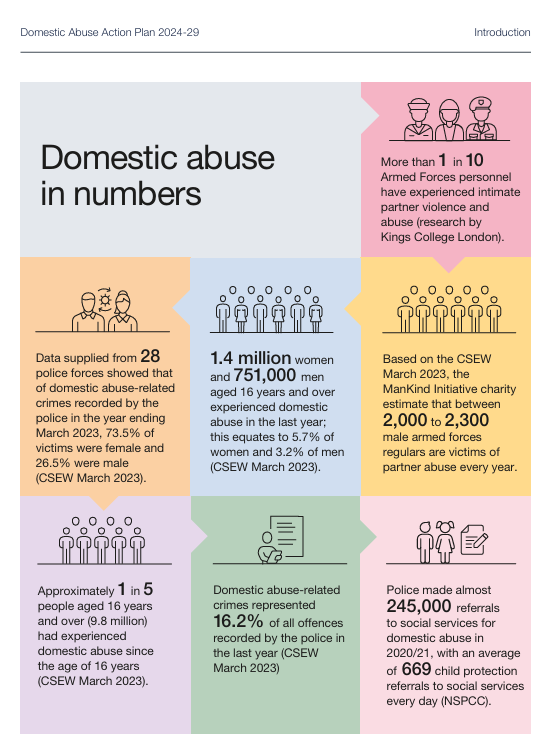
The statistics help us understand why this has become a procurement priority:
Around 3.8 million adults in England and Wales experienced domestic abuse in the year ending March 2025 – that’s 7.8% of people aged 16 and over (Office for National Statistics).
Police receive a domestic abuse call every 30 seconds – approximately 2,800 calls every day (Cosmopolitan, October 2025).
The estimated social and economic cost reached £66 billion in the year ending March 2017, with £14 billion stemming from lost productivity and time off work alone (The Home Office).
These aren’t just statistics. They represent real people, many of whom are part of our workforces, our supply chains and our communities.
The Workplace Connection
Domestic abuse doesn’t stop at the workplace door. According to the Employer’s Initiative on Domestic Abuse (EIDA):
Nearly 9 out of 10 employees experiencing domestic abuse report that it impacts their work performance
Over half need to take time off, and nearly half arrive late to work
One in five working women have taken time off due to domestic abuse, and one in fifty have lost their jobs as a direct result
More than 25% of colleagues have been threatened or harmed by a co-worker’s abuser
Yet the Domestic Abuse Alliance reports that only around 5% of employers currently have specific policies or guidelines in place to address this issue.
When organisations overlook domestic abuse, the impact extends far beyond the individual. It affects team dynamics, productivity and workplace safety for everyone.
Source of image:
MOD Domestic Abuse Action Plan
What the Government now Expects from Employers
The UK government is being clear about what it wants to see from employers: proactive, compassionate action that creates genuinely safe and supportive environments.
Their expectations, outlined in recent guidance on workplace support for victims of domestic abuse, focus on three areas:
Raising awareness of how domestic abuse impacts both individuals and organisations
Building and sharing best practice across different sectors and industries
Strengthening employment rights to better protect affected staff
This is where social value comes in. Under the updated PPN002, suppliers bidding for public sector contracts must now evidence how their contract delivery will help reduce crime, including domestic abuse. This means demonstrating influence across staff, suppliers, customers and communities.
To put it simply: domestic abuse awareness has become both a compliance requirement and an opportunity to make a genuine difference.
Four Practical Ways to Respond
From a social value perspective, we see four key areas where organisations can take meaningful action:
Build awareness & Understanding: Let’s start by acknowledging domestic abuse as a workplace issue. Consider providing training for managers and HR teams so they can recognise signs and respond with sensitivity and care. Make information about support services easily accessible – organisations like Refuge, Women’s Aid and Respect offer invaluable resources.
Create Clear & Compassionate Policies: Perhaps you’ve never thought that your policies have the power to show care, but a well-designed domestic abuse policy sends a powerful message. It should clearly state your commitment to supporting affected employees, explain confidentiality and reporting procedures, outline what practical support is available and ideally involve your staff or unions to develop it. This collaborative approach helps to ensure the policy is not only practical, but that it is also trusted.
Offer Flexible & Practical Support: Flexibility can be life changing. This might include remote working options, adjusted hours, time off for safety-related appointments (for example legal, health or housing) and safe communication channels like alternative email addresses or agreed code words. The proposed Domestic Abuse (Safe Leave) Bill could introduce up to 10 days of paid leave for victims – something that future-ready organisations might want to consider implementing ahead of legislation.
Collaborate & Share Learning: Partner with specialist organisations like the Employer’s Initiative on Domestic Abuse (EIDA) and domestic abuse charities who bring deep expertise. You’ll not only hear from experts, you’ll also diversify your supply chain by including the voluntary sector in it. You could also choose to share what works across your industry. When we learn from one another, good practice becomes standard practice.
Moving Forward Together
The inclusion of domestic abuse within PPN002 reflects something broader: a growing recognition that employers have a vital role to play in protecting their people and communities. This isn’t about becoming experts in domestic abuse support – after all, that’s what specialist organisations are for! This is about creating the conditions where people can access that support safely, and where workplaces become part of the solution rather than an additional barrier.
If you would like to explore how your organisation can strengthen its approach to domestic abuse within your social value and procurement commitments, we would be happy to help. At Samtaler, we’re here to support you in helping to make these commitments both meaningful and measurable.
For specialist domestic abuse support and advice, please contact organisations such as Refuge, Women’s Aid, EIDA or Respect.